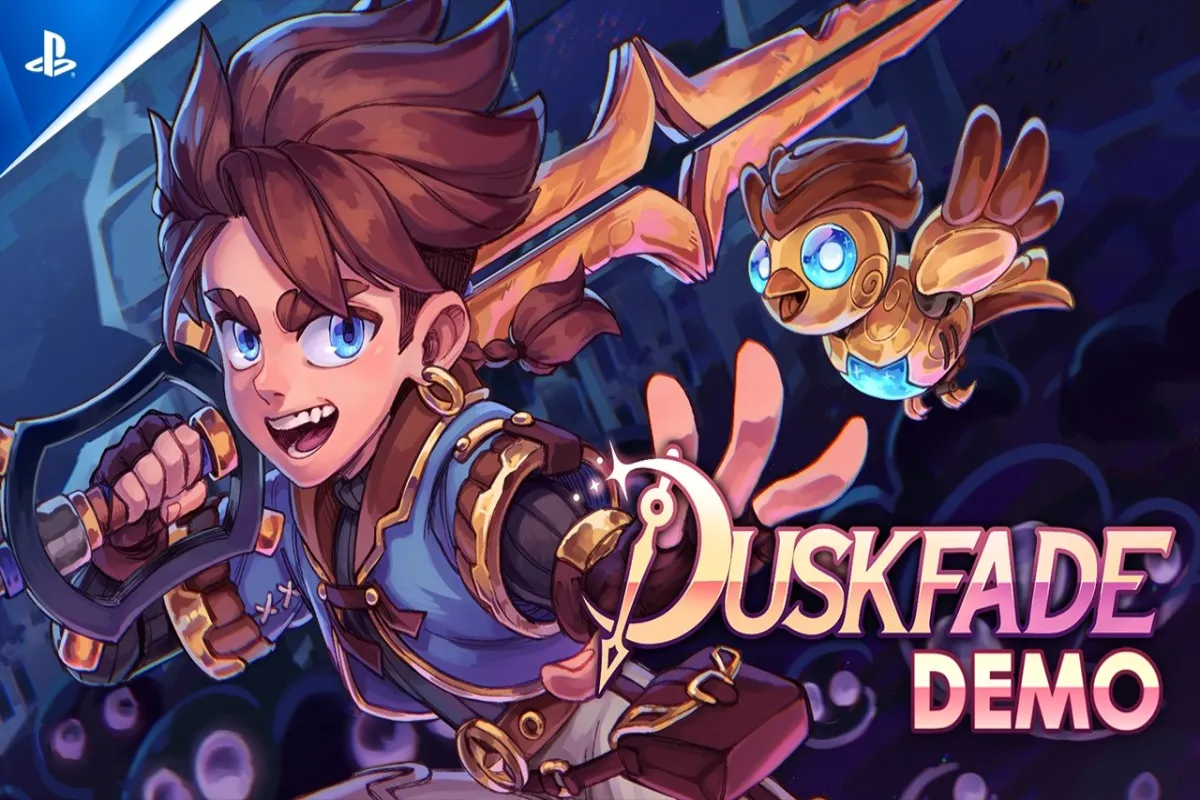
Spain has quietly become one of Europe's most fertile breeding grounds for stylised 3D action-platformers, and the Duskfade Spanish developer studio Weird Beluga S.L. sits right at the centre of that movement. Tucked away from the AAA giants of Madrid and Barcelona, this small but ambitious team is shaping Duskfade's frozen-hour world with a distinctly Iberian sensibility that blends folklore, clockwork imagery, and a hand-crafted approach to level design. If you've ever wondered who is actually building this Unreal Engine 5 oddity ahead of its August 2026 release, you're in the right place — and the answer is far more interesting than a faceless corporate logo.
Meet Weird Beluga S.L. — The Studio Behind Duskfade
The Duskfade Spanish developer studio is officially registered as Weird Beluga S.L., a Sociedad Limitada — Spain's equivalent of a private limited company — which gives the team the legal flexibility to operate as an independent publisher while still signing with international partners for distribution. The "S.L." suffix isn't decorative; it tells you exactly what kind of entity you're dealing with, and it matters when deals like the Fireshine Games publishing partnership come together for multi-platform launches.
What makes Weird Beluga unusual in the current indie landscape is the way the studio leans into handcrafted environmental storytelling rather than procedural generation. According to the Duskfade Steam store page, the game ships as a buy-to-play title with no microtransactions, and the studio's commitment to that model says a great deal about how Weird Beluga wants players to experience the clockwork world of Zirian. Players curious about the studio's broader history can dig into our Weird Beluga studio history breakdown for a deeper look at the team's earlier work.
Studio Identity and Legal Structure
The Spanish indie game scene is full of tiny studios operating under SL or SLU (Sociedad Limitada Unipersonal) frameworks, and Weird Beluga S.L. fits comfortably into that ecosystem. The structure lets the founders retain creative control while opening doors to EU and Latin American publishing channels — which is particularly useful for a studio targeting the PlayStation 5, Xbox Series X|S, Nintendo Switch 2, and PC launch listed on the Steam page.
Core Team and Creative Leads
The Weird Beluga team is small enough that almost every member touches multiple disciplines, from combat design to the Spanish-language localisation pass on Zirian's dialogue. According to the XboxTavern developer interview, lead decisions around backtracking mechanics and the layout of Tick Town — the game's central hub — were driven by a desire to make exploration feel rewarding rather than punitive.
| Studio Attribute | Details |
|---|---|
| Legal Name | Weird Beluga S.L. |
| Country | Spain |
| Studio Type | Independent (Sociedad Limitada) |
| Role on Duskfade | Developer & co-creative lead |
| Publishing Partner | Fireshine Games (Sold Out Sales and Marketing Limited) |
| Engine | Unreal Engine 5 |
From Tenerife to Tick Town — How Weird Beluga Built Duskfade
Duskfade didn't appear overnight, and the path the Duskfade Spanish developer studio took to ship a full Unreal Engine 5 title is worth understanding if you want context for the game's design quirks. The studio's earliest builds reportedly leaned heavily on platforming experiments before the story-driven framing around Zirian, Cuckoo (the mechanical companion), and the frozen-hour narrative locked into place. Tick Town, in particular, evolved through several complete rebuilds because Weird Beluga kept running into how much backtracking the world actually required.
In the XboxTavern interview, the team discusses how they reworked Tick Town multiple times to avoid the classic Metroidvania trap of forcing players through identical corridors every loop, instead opting for shortcuts and visual landmarks so the central hub feels lived-in rather than repetitive. That decision ended up rippling outward into how each of the five worlds connects back to the hub, which is a big reason the world map reads as a deliberate clockwork diagram rather than a tangle of corridors. Players who want the studio's side of the conversation can read more in our Duskfade developer interview summary.
Early Milestones and Prototype Eras
Before Duskfade had a name, Weird Beluga was prototyping small Unreal Engine 5 tech demos focused on gear-shard-style abilities and minute-hand sword combat, both of which survive in the shipping game as the Minutero Sword and the broader clockwork progression system. Those prototypes were critical for proving the engine could handle the studio's high-contrast lighting without tanking frame rates on Switch 2 and the base PS5.
Working with Fireshine Games
The publishing deal with Fireshine Games — publicly listed as Sold Out Sales and Marketing Limited in the Steam credits — gave Weird Beluga access to a global distribution network that an independent Spanish studio would otherwise struggle to build alone. In return, Fireshine provides marketing muscle, certification help across consoles, and the localisation pipeline that brings Duskfade to English, Spanish, Japanese, German, and other languages at launch.
| Development Phase | Approximate Window | Key Output |
|---|---|---|
| Pre-production & tech demos | 2022–2023 | UE5 prototypes, Minutero combat proof-of-concept |
| Vertical slice | Early 2024 | Tick Town hub, two playable worlds |
| Alpha | Late 2024 – mid 2025 | Full five-world map, boss encounters |
| Publishing partnership | 2025 | Fireshine Games deal announced |
| Beta & certification | 2026 | Console certification, localisation pass |
| Launch | August 13, 2026 | Multi-platform release |
Spanish Cultural DNA Inside the Duskfade Spanish Developer Studio
Spanish culture doesn't show up in Duskfade as a coat of paint — it permeates the lighting, the architecture, and the pacing of the entire game. The Creative Bloq feature on Duskfade's art direction traces how the studio folded Iberian influences into everything from the Guayota-inspired boss designs to the warm stone-and-tile palette that contrasts against the otherwise frozen-hour aesthetic. That duality — frozen time on top, warm heritage underneath — is one of the most distinctive things the Duskfade Spanish developer studio brings to the table.
If you want a structured tour of those design choices, our Spanish cultural influences in Duskfade guide maps each cultural touchstone to the in-game region it shows up in, from the Howling Geode caves to the Stonetusk Canyon mesas. The reality is that Weird Beluga didn't just borrow Spanish imagery; they used it as a structural load-bearing element for the entire world's atmosphere.
Folklore References and Mythological Anchors
Zirian's journey involves confronting Despair, an entity whose visual design draws on Iberian shadow-folklore traditions rather than the usual Western dark-fantasy playbook. The studio has spoken in interviews about pulling from regional Canary Islands myth — including Guayota, the volcanic demon imprisoned by Guaycha — to inform boss silhouettes and biome colour grading.
Architectural and Environmental Choices
Spanish tile work, Andalusian archways, and the warm sandstone palette of inland Castile all show up in the level geometry, even when the actual in-game biome is supposedly a frozen clock tower. That contrast is intentional: it gives the world a sense of lived-in history that purely "icy ruin" aesthetics lack, and it's one of the strongest selling points the Duskfade Spanish developer studio has when players compare the game to peers.
| Cultural Anchor | In-Game Manifestation | Source Region |
|---|---|---|
| Guayota volcanic myth | Guayota boss silhouette & lava palette | Canary Islands |
| Andalusian tile patterns | Hub-area floor textures in Tick Town | Andalusia |
| Castilian sandstone | World geometry in Stonetusk Canyon | Castile |
| Iberian shadow folklore | Despair entity visual design | Pan-Iberian |
| Moorish archways | Background architecture in clock-tower biomes | Al-Andalus heritage |
Duskfade Spanish Developer Studio in the Wider Indie Scene
Spain's indie scene in 2026 is more crowded than it was a decade ago, which is why context matters when you're sizing up Weird Beluga's ambitions. The Duskfade Spanish developer studio isn't the only Iberian team shipping a notable platformer this year — studios like Pendulo Studios, Locomalito, and the Seville-based Santa Ragione have all had recent releases — but Duskfade stands out because of its Unreal Engine 5 production values and its console-first launch plan. Most Spanish indie studios historically target PC first and port later; Weird Beluga has done the opposite, betting that the Switch 2 and PS5 audiences will be the ones who most appreciate the game's backtracking-friendly design.
| Studio | Notable 2025–2026 Release | Engine | Primary Platforms |
|---|---|---|---|
| Weird Beluga S.L. | Duskfade | Unreal Engine 5 | PC, PS5, Xbox Series X |
| Pendulo Studios | Narrative adventure (2026) | Unity | PC, consoles |
| Santa Ragione | Stylised action (2026) | Custom | PC, Switch |
| Locomalito | Retro-inspired platformer | Custom 2D | PC, consoles |
| Tonika Studios | Atmospheric horror (2026) | Unreal Engine 5 | PC, PS5 |
This positioning matters because it tells you what the Duskfade Spanish developer studio is competing on: not the cheapest price or the largest scope, but the quality of its moment-to-moment gameplay and the cultural specificity of its world. For more on what makes Weird Beluga itself stand out within this group, the profile of Weird Beluga as Duskfade's developer offers a focused breakdown of the studio's design philosophy.
Quick Facts About the Duskfade Spanish Developer Studio
Before wrapping up, here's a consolidated snapshot for players who want the essentials at a glance. Everything below comes from publicly available sources — primarily the Steam store page, the XboxTavern developer interview, and the Creative Bloq feature — and should remain accurate as of the article's last-modified date, though some details (like post-launch content plans) may evolve.
| Category | Detail |
|---|---|
| Full Studio Name | Weird Beluga S.L. |
| Country / Region | Spain (peninsular + Canary Islands influences) |
| Role on Duskfade | Lead developer, co-creative direction |
| Publisher | Fireshine Games (Sold Out Sales and Marketing Limited) |
| Engine | Unreal Engine 5 |
| Platforms | PC (Steam), PlayStation 5, Xbox Series X|S, Nintendo Switch 2 |
| Release Date | August 13, 2026 |
| Pricing Model | Buy-to-play, no microtransactions |
| Languages at Launch | English, Spanish, Japanese, German, French, more |
| Cultural Anchors | Canary Islands myth, Andalusian tile work, Castilian stone |
The fact that Weird Beluga is shipping Duskfade at full price across four major platforms with no microtransactions is itself a statement of intent — most Spanish indie studios of comparable size would either cut scope or lean on DLC. Duskfade's launch strategy suggests the studio is aiming for sustainability through quality rather than live-service grind, which is a notable stance in the current market.
Frequently Asked Questions
Who is the Duskfade Spanish developer studio?
The Duskfade Spanish developer studio is Weird Beluga S.L., an independent Spanish studio registered as a Sociedad Limitada. They handle lead development, creative direction, and engine work, while Fireshine Games manages publishing and distribution.
Where is Weird Beluga S.L. based?
The studio operates out of Spain, with team members drawing on influences from across the country — including the Canary Islands, which directly informed the Guayota boss design and several biome aesthetics in Duskfade.
What engine does the Duskfade Spanish developer studio use?
Weird Beluga built Duskfade in Unreal Engine 5, which is what enables the high-contrast lighting and detailed geometry across the five clockwork worlds.
Who publishes Duskfade?
Fireshine Games (operating under Sold Out Sales and Marketing Limited) is Duskfade's publisher. They handle console certification, marketing, and the multi-language localisation pipeline for the August 2026 launch.
Will the Duskfade Spanish developer studio support the game after launch?
While specific post-launch plans weren't fully locked in at the time of writing, the studio has signalled interest in quality-of-life updates and potentially additional content packs, though nothing has been confirmed in detail as of August 2026.
What stands out most about Weird Beluga is that the team refuses to treat Spanish heritage as window-dressing — every architectural choice, boss silhouette, and audio cue ties back to something real from Iberian culture, which makes Duskfade feel genuinely distinct in a year crowded with stylised platformers. If you've played through the game and noticed details that point to specific Spanish traditions, share them in the comments; the team's design philosophy rewards players who look closely, and the conversation around Weird Beluga's choices only gets richer the more players contribute.