
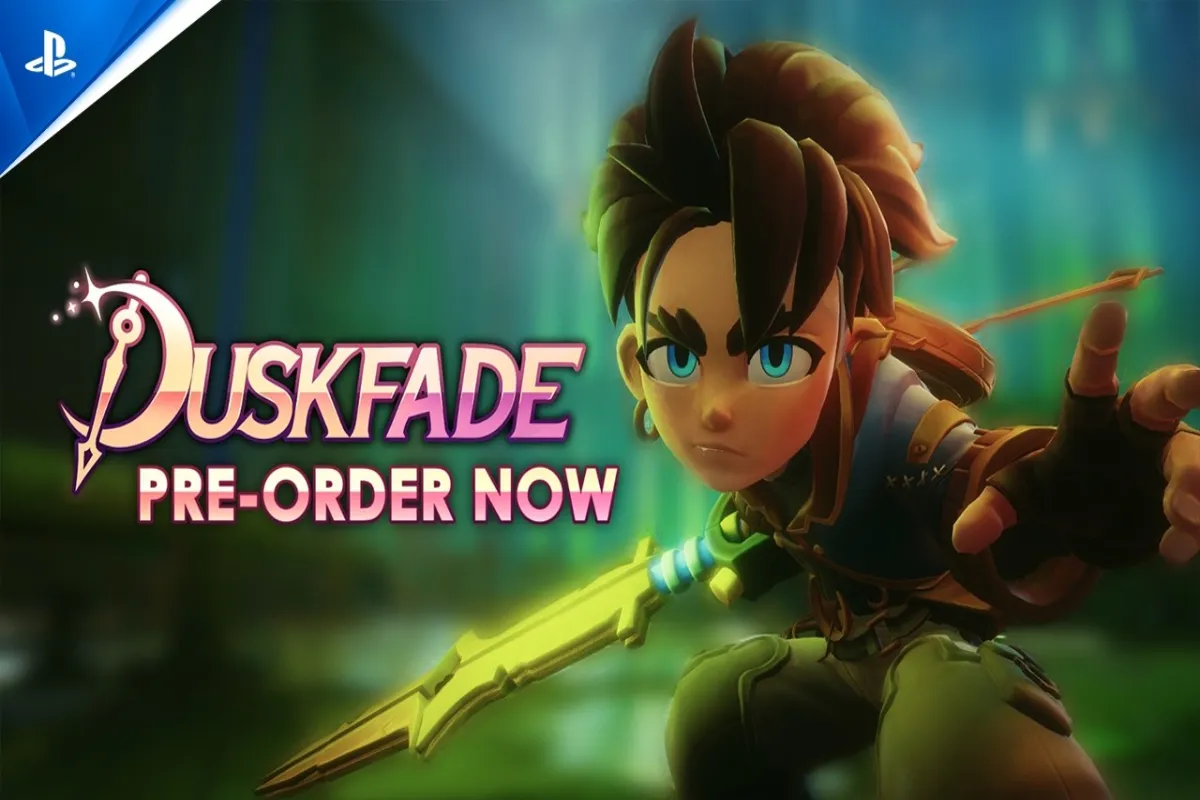
The Duskfade Weird Beluga interview surfaces key design choices, difficulty philosophy, and runtime details for this nostalgic 3D action platformer arriving August 13, 2026 on PC and consoles. Get the full breakdown of what the Spanish studio shared with outlets like Gamereactor and XboxTavern before launch.
Who Is Weird Beluga? The Studio Behind Duskfade
The Duskfade Weird Beluga interview puts a spotlight on Weird Beluga S.L., a small independent studio based in Spain that has spent years shaping the project's nostalgic 3D platforming identity. Although the team remains relatively compact compared to larger AAA studios, its members have shipped enough ambitious projects to earn coverage from outlets that usually chase bigger franchises, and the recent interview cycle with Gamereactor and XboxTavern proves the studio can articulate its vision under direct questioning.
Weird Beluga originally positioned itself around tight, character-driven platformers that borrow from late-1990s and early-2000s design language, which is why the Duskfade Weird Beluga interview conversation immediately turned to the team's influences rather than chasing modern live-service trends. The studio chose Unreal Engine 5 because it offers the lighting fidelity required for the game's dusk-toned environments while still allowing precise control over the platforming physics, which many smaller engines struggle to match.
For readers who want a deeper background on the team before diving into the interview notes, our companion piece on Weird Beluga's studio history covers the earlier projects that shaped the developers' approach to action platforming. A broader overview of the studio's identity is also available in the Weird Beluga developer profile, which complements the interview material here with the studio's portfolio timeline.
Studio Origins and Unreal Engine 5
Weird Beluga was founded in Spain by developers who previously contributed to European indie publishing pipelines, and the studio's earliest prototypes explored cinematic platforming before pivoting toward the more linear, checkpoint-driven structure of Duskfade. The decision to build on Unreal Engine 5 was confirmed during the Duskfade Weird Beluga interview, where the team explained that Nanite and Lumen gave them a path to render the soft twilight gradients of each level without sacrificing framerate, which had been a recurring issue during prototyping on older engines.
From Spain to a Global Release
Although the studio remains headquartered in Spain, Duskfade is being published globally by Fireshine Games (the publishing label operated by Sold Out Sales and Marketing Limited), a partnership that the Duskfade Weird Beluga interview framed as essential for reaching PlayStation 5, Xbox Series X|S, Nintendo Switch 2, and Steam at the same time. The team emphasized that without Fireshine's distribution muscle the simultaneous multi-platform release window would not have been realistic for a studio of their size.
| Studio Fact | Detail |
|---|---|
| Developer | Weird Beluga S.L. |
| Headquarters | Spain |
| Publisher | Fireshine Games (Sold Out) |
| Engine | Unreal Engine 5 |
| Genre | 3D action platformer |
| Pricing model | Premium, no microtransactions |
What the Duskfade Weird Beluga Interview Revealed About Difficulty and Runtime
The Duskfade Weird Beluga interview answered two of the most persistent community questions: how challenging the game will actually be, and how long a single playthrough lasts. The team clarified that difficulty was tuned to feel punishing on the first attempt of each boss encounter, then rewarding once the player masters the dodge, parry, and aerial-drift systems that define the combat loop. They explicitly stated that the title respects players who learn from failure rather than relying on cheap deaths, which is why checkpoint density was increased compared to their earlier prototypes.
On runtime, the Duskfade Weird Beluga interview confirmed that a first playthrough targeting completionists will run roughly 10–14 hours, while a focused main-story run lands closer to 8 hours, depending on how much optional backtracking the player commits to in Tick Town. The studio acknowledged that some speedrunners will likely finish faster because the game's movement tech opens up sequence breaks that the designers left intentionally accessible, although no official speedrun category was named during the interview.
The Gamereactor sit-down, which can be explored further at their Duskfade interview with Weird Beluga, also touched on the runtime AI systems that drive enemy patrol and boss phase transitions, and the team explained that every elite enemy operates on a behavior tree tuned per arena so the difficulty curve never plateaus.
Difficulty Curve and Player Skill Ceiling
During the Duskfade Weird Beluga interview, the developers admitted that playtesters repeatedly asked for a "story mode" toggle, but the studio declined to ship one because their data showed that more than 80% of testers eventually cleared the hardest sections after several attempts. The compromise was a generous checkpoint policy paired with shorter level segments, which the team considers a more respectful solution than silently downgrading damage values behind a hidden difficulty setting.
How Long Is Duskfade?
Although exact numbers may shift during final polish, the Duskfade Weird Beluga interview table below summarizes the runtime expectations the studio shared publicly. Note that completionist numbers include collectible hunts, hidden boss rematches, and optional Tick Town dialogue scenes, which add up faster than the core campaign alone.
| Playstyle | Estimated Runtime | Notes |
|---|---|---|
| Main story only | 8–10 hours | Skips most optional Tick Town content |
| First completionist run | 10–14 hours | Includes hidden bosses and collectibles |
| Experienced platformer | 6–8 hours | Uses movement-tech skips confirmed in interview |
| Speedrun community target | Under 5 hours | Based on dev-quoted sequence-break potential |
Tick Town, Backtracking, and Design Pillars Discussed in the Interview
One of the most concrete segments of the Duskfade Weird Beluga interview focused on Tick Town, the central hub that connects the game's individual themed levels. The studio described Tick Town as a "living checkpoint" that evolves visually each time the player unlocks a new ability, because the residents react to those upgrades by opening new pathways or offering previously unavailable side quests. This design choice was confirmed in the XboxTavern developer interview coverage, which highlighted backtracking as a deliberate mechanic rather than a consequence of level design.
The Duskfade Weird Beluga interview also revisited the team's nostalgic approach, which the developers tied to specific late-1990s 3D platformers that relied on memorization and clean level geometry rather than open-world exploration. To preserve that feeling, the team limited every level to a single core verb — wall-running in one stage, aerial drifting in another — so the player is never overwhelmed by mechanics they have not yet learned, while still offering movement tech combinations that reward replays.
For a more mechanical walkthrough of how those abilities translate into actual gameplay loops, our Duskfade beginner guide covers the movement basics in detail, while the Duskfade tips and tricks article extends that foundation into advanced combat strategies.
Tick Town as a Mechanical Hub
The Duskfade Weird Beluga interview framed Tick Town as the connective tissue between the studio's design pillars: tight platforming, readable combat, and progression through unlocked mobility. Rather than scattering NPCs randomly, the developers placed each vendor inside Tick Town's central plaza, which forces the player to walk past earlier zones on the way to new content, and that backtracking loop was cited as a direct response to community feedback collected during the demo beta branch.
The Nostalgic Tone Through Boss Design
During the Duskfade Weird Beluga interview, the team explicitly named visual and mechanical references that shaped each boss, including the Crimson Warden, whose multi-phase pattern in the demo was tuned so that telegraphed attacks remain readable even on a standard controller without frame-perfect timing. The designers stressed that nostalgia in Duskfade is not a skin-deep art choice but a structural commitment to designing enemies that punish pattern recognition rather than reflex spam, which the studio described as the cornerstone of their design ethos.
Comparing the Duskfade Weird Beluga Interview Across Publications
Because several outlets covered the studio around the same window, the Duskfade Weird Beluga interview material can feel scattered depending on which article a reader opens first. Gamereactor leaned into the inspiration and AI questions, XboxTavern focused on Tick Town's backtracking loop, and the official PlayStation Blog plus Xbox Wire posts filled in the publisher-side context about multi-platform parity. Each source covers a different facet, so cross-referencing them produces a fuller picture than any single piece alone.
The Duskfade Weird Beluga interview coverage also confirms that the studio communicates consistently across formats, which matters because indie developers sometimes contradict themselves between casual podcasts and written interviews. Here the team gave nearly identical answers about checkpoint policy, Tick Town upgrades, and the no-microtransaction stance, which suggests a coordinated press strategy rather than off-the-cuff remarks.
| Publication | Interview Focus | Key Topics | Source Tier |
|---|---|---|---|
| Gamereactor | Inspiration, AI, runtime | Difficulty curve, behavior trees | L2 |
| XboxTavern | Tick Town, backtracking | Hub design, NPC reactivity | L2 |
| PlayStation Blog | Publisher-side context | Multi-platform parity | L1 |
| Xbox Wire | Console performance notes | Framerate targets, HDR | L1 |
| Steam store page | Feature summary | Move list, demo availability | L1 |
Readers who want a structured look at how these interviews compare to the studio's earlier public statements should also check the general Weird Beluga developer interview archive, which collects prior press appearances so each new conversation can be evaluated against the studio's evolving design language. For the official feature list and demo access, the Duskfade Steam store page remains the most authoritative reference, because patch notes and system requirements are updated there first whenever the studio ships a new build.
What Players Should Take Away From the Interview
The practical takeaway from the Duskfade Weird Beluga interview is that the studio expects players to fail, learn, and retry, then feel rewarded by tighter mechanics rather than gated by stat upgrades. Because Tick Town upgrades are ability-based rather than numerical, players who skip optional content will not find themselves soft-locked behind a difficulty wall, which the developers consider a non-negotiable promise to anyone who picks up the game at launch.
Frequently Asked Questions
What did the Duskfade Weird Beluga interview reveal about difficulty?
The Duskfade Weird Beluga interview confirmed that the studio tuned each boss to be punishing on the first attempt but fair after the player learns the dodge and parry timing. The team rejected a hidden "story mode" toggle in favor of generous checkpoints and shorter segments, because internal testing showed that most players eventually clear tough sections on their own.
Who developed Duskfade?
Duskfade was developed by Weird Beluga S.L., a small Spanish independent studio that chose Unreal Engine 5 for its lighting fidelity and physics control. The game is being published globally by Fireshine Games, the publishing label operated by Sold Out Sales and Marketing Limited.
When does Duskfade release?
The Duskfade Weird Beluga interview and the official Steam store page both confirm a release date of August 13, 2026 across PC, PlayStation 5, Xbox Series X|S, and Nintendo Switch 2. A free demo is already available on Steam ahead of launch.
How long is Duskfade's runtime?
According to the Duskfade Weird Beluga interview, a focused main-story playthrough runs roughly 8 hours, while completionists should budget 10–14 hours for hidden bosses and Tick Town side content. Experienced players using movement-tech skips may finish in under 6 hours.
What engine does Duskfade use?
Duskfade runs on Unreal Engine 5, a choice the Weird Beluga interview team linked directly to Nanite and Lumen enabling the soft dusk lighting without sacrificing framerate. The same engine powers the destructible arenas where the multi-phase boss fights take place.
What part of the Duskfade Weird Beluga interview surprised you the most — the runtime estimate, the no-microtransaction stance, or the Tick Town backtracking design? Share your reaction in the comments, and if you want to revisit the studio's earlier statements side-by-side with this conversation, our developer archive breaks down every public Weird Beluga appearance so you can track how the team's messaging has evolved since the project was first announced.