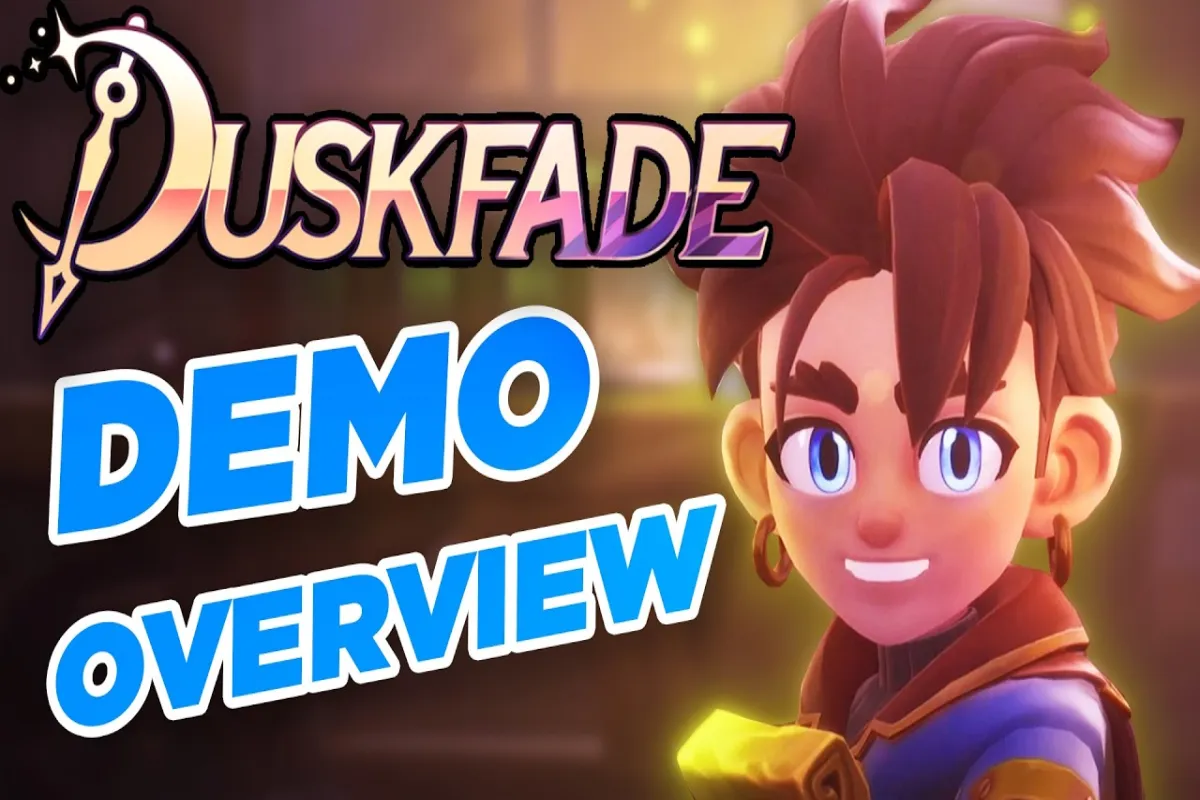
Origins of Weird Beluga S.L. and the Path to Duskfade
Weird Beluga S.L. is the Madrid-based independent studio responsible for Duskfade, the 3D action-platformer that lands on PC, PlayStation 5, Xbox Series X|S, and Nintendo Switch 2 on August 13, 2026. The studio's path to Duskfade didn't happen overnight — it's the product of years of small-team iteration on action game mechanics, hand-crafted worldbuilding, and a nostalgic platforming sensibility that the team has been refining long before any storefront ever listed the project. For players curious about who actually made the game they're about to play, the Duskfade Weird Beluga studio history is a story about a tightly-knit Spanish team betting everything on a single Unreal Engine 5 release.
The studio was founded in Spain with a roster small enough that almost every contributor wears multiple hats, which is one of the reasons the world of Duskfade — the frozen-in-time Zirian kingdoms, the Tick Town hub, the Minutero sword, and the Cuckoo companion — reads as such a cohesive universe. There is no committee filter between an idea and its implementation, and that energy carries through every clocktower you climb and every boss arena you enter, because the people who sketched the level are the same ones tuning the hitboxes.
Duskfade is Weird Beluga's flagship project and, as of August 2026, the only announced title on its public catalog. The studio chose to put its full weight behind one game rather than fragmenting resources across multiple prototypes, a strategy that becomes obvious once you see how polished the build looks in the available Duskfade Steam demo and how dense the biomes feel on first playthrough. That bet-on-one-game approach is uncommon in 2026, and it's part of why this studio is worth paying attention to.
The Core Team Behind Duskfade
Founders and Creative Leads
The studio is led by a small founding group with prior experience in action game design, 3D animation, and Unreal Engine production, according to community profiles and the studio's own communications. The Duskfade creative direction — including the nostalgic take on action platforming angle repeatedly cited by PlayStation's official announcement — is driven by people who grew up playing 3D platformers in the late 1990s and early 2000s and wanted to rebuild that feeling rather than reinvent the genre.
That leadership tone shows up in the writing, too: the Master Clockmakers lore, the dialogue cadence with Allira, and the way the Despair entity is framed all feel authored rather than committee-written. For deeper insight into how the leadership talks about their craft, our Duskfade Weird Beluga interview coverage breaks down their design philosophy in their own words.
Team Size and Structure
Because Weird Beluga S.L. operates as a boutique Spanish independent outfit, the credited team list is compact — likely a few dozen core members with external QA and localization partners. That compactness shows up in the production values: nearly every asset you encounter in Duskfade, from the Cuckoo companion design to the Howling Geode biome art, carries a consistent visual signature, which suggests a tightly looped art direction pipeline rather than a fragmented outsourced workflow where assets arrive from a dozen disconnected vendors.
| Studio Role | Approx. Coverage | Where It Shows in Duskfade |
|---|---|---|
| Creative direction | Founders + lead designers | World tone, time-frozen motif, lore framing |
| Engineering | Small core UE5 team | Combat responsiveness, traversal feel |
| Art & animation | In-house 3D artists | Zirian character silhouettes, biome color scripts |
| Audio & music | Composers + SFX crew | Clocktick motifs, Minutero sword chime |
| QA & localization | External partners + internal | Multi-language support (ja, de, fr, etc.) |
The team also coordinates closely with publisher Fireshine Games, which handles marketing, platform relations, and the Steam demo rollout. That partnership allows the studio to stay focused on craft and design decisions rather than the business logistics of a four-platform launch, and it has reportedly let the team avoid the crunch patterns that plague larger productions.
Weird Beluga's Design Philosophy and Influences
Why Unreal Engine 5
The decision to build Duskfade on Unreal Engine 5 was not arbitrary. According to the studio's public communications and the platform announcements, UE5's lighting and Lumen-based workflow let the small team achieve the moody, golden-hour glow across the Stonetusk Canyon and Starstone Mines biomes without building proprietary rendering tech from scratch. For a studio of Weird Beluga's size, the engine choice functions as a force multiplier — it lets a handful of artists deliver visuals that would normally require a much larger rendering department, which is precisely why the screenshots look as polished as they do for a studio of this size.
The studio also benefits from UE5's animation graph tooling for the Minutero sword combat, which is heavily timing-based and benefits from the engine's animation blending and montage system. Without UE5, the responsiveness of the clock-hand parry mechanic would likely have been much harder to tune at this fidelity.
Nostalgia as a Design Constraint
Weird Beluga has openly framed Duskfade as a nostalgic homage to the 3D action-platformers of the late 1990s and early 2000s, which explains why the movement feels weighty, the camera behaves in a way that recalls that era, and the boss patterns reward patience over twitch reflexes. The Master Clockmakers lore and the idea of a world stuck at the wrong hour isn't just a story gimmick — it's the thematic wrapper around a movement system that asks players to think about timing, rhythm, and patience rather than button-mashing.
That nostalgic frame also explains why the publisher is Fireshine Games rather than a major label: the game is being marketed to players who already love the genre's heritage, not to mainstream audiences looking for the next live-service hit. The buy-to-play premium release, with no microtransactions, is a deliberate signal of that positioning, and it aligns with how the studio talks about its work in interviews.
From Announcement to Launch: A Release Timeline
The Duskfade Weird Beluga studio history can be tracked across a relatively short but intense public arc, beginning with the first platform blog post in April 2025 and culminating in the August 2026 release. Below is a condensed timeline based on confirmed public announcements and storefront updates as of early August 2026.
| Date | Event | Confirmed Source |
|---|---|---|
| April 10, 2025 | Multi-platform announcement (PS5, Xbox, Steam) | PlayStation Blog + Xbox Wire |
| Mid–Late 2025 | Steam demo build goes live | Steam store page (App 4023080) |
| Q1 2026 | Wishlist surge; publisher ramps marketing | Fireshine Games press kit |
| July 2026 | Final preview coverage, pre-load opens | Steam store page |
| August 13, 2026 | Global launch on PC, PS5, Xbox Series X|S, Switch 2 | Steam + platform stores |
The compressed timeline is unusual for a UE5 project of this scope, and the fact that the team hit it without visible crunch reports suggests the scope was deliberately scoped to fit the team. For players who want a complete history of patches, hotfixes, and demo updates post-launch, our Duskfade update history tracks every change the studio has shipped.
Partnership with Fireshine Games and Platform Strategy
Weird Beluga S.L. partnered with Fireshine Games (trading under Sold Out Sales and Marketing Limited) to publish Duskfade worldwide. This is a publisher-developer relationship where Fireshine handles retail distribution, marketing, and platform certification, while Weird Beluga retains full creative control over the game's design and content. That split is common for Spanish indie studios of this size, and it has worked out well: the game is launching on a wide platform lineup without the studio having to expand its business team, which is a meaningful advantage for a small outfit trying to reach a global audience.
Platform Availability at Launch
| Platform | Status at Launch | Notes |
|---|---|---|
| PC (Steam) | Confirmed | Includes demo, app ID 2542020 |
| PlayStation 5 | Confirmed | Announced via PlayStation Blog |
| Xbox Series X|S | Confirmed | Announced via Xbox Wire |
| Nintendo Switch 2 | Confirmed | Cross-gen parity targeted |
| Microtransactions | None | Buy-to-play, premium release |
For a broader look at how the studio compares with other independent outfits coming out of Spain, our Spanish developer studio profile puts Duskfade in regional context — the Spanish indie scene has produced a wave of UE5 and Unity projects in recent years, and Weird Beluga sits firmly in that wave with a distinctly nostalgic tilt.
Frequently Asked Questions
Who developed Duskfade?
Duskfade was developed by Weird Beluga S.L., a small independent studio based in Madrid, Spain, and published globally by Fireshine Games.
When was Weird Beluga S.L. founded?
The studio has been operating as a small team for several years prior to the 2025 Duskfade announcement, though exact founding dates are not publicly confirmed. As of August 2026, Duskfade remains the studio's flagship and only announced title.
Is Weird Beluga a first-party Sony or Microsoft studio?
No. Weird Beluga S.L. is a fully independent Spanish studio. It partnered with publisher Fireshine Games, which handles platform distribution and marketing across PC, PS5, Xbox Series X|S, and Nintendo Switch 2.
How big is the Duskfade development team?
Where can I read more about the studio's creative vision?
Our Duskfade beginner guide covers the gameplay side, while the studio's official communications — linked from the Duskfade Steam page and the PlayStation Blog announcement — give the most direct window into their creative intent. Beyond the storefront, the studio's interview archive and Fireshine Games press materials are the next best source for verified quotes about the team's direction.
Which part of the Duskfade development story do you want us to dig into next — the engine choice, the combat design, or the team's prior work before this title?